Accelerated Pilot Training In Los Angeles: How Fast Can You Get Licensed?
Accelerated flight training compresses the same FAA requirements into weeks of near-daily flying instead of months of weekly lessons. Here is what it involves, how long each license takes at a full-time pace, and what can slow you down.

Accelerated flight training means flying most days, often more than once a day, so you meet the FAA requirements in the shortest practical calendar time. The hours required do not change: 40 for a private pilot certificate and 20 for a sport pilot certificate.
At Essence Flight School, the typical private pilot pace is two to four months. On a full-time accelerated schedule, a well-prepared student can finish the private pilot license in as little as about 30 days and the sport pilot license in as little as 14 days. Those are best cases, not guarantees: weather, your own progress and checkride scheduling set the final date.

What Accelerated Flight Training Really Means
Accelerated pilot training is a schedule, not a shortcut. The FAA requirements are identical; only the calendar changes.
Every pilot certificate has a legal minimum. Under 14 CFR 61.109, a private pilot applicant needs at least 40 hours of flight time, including 20 hours of training with an instructor and 10 hours of solo flight, plus specific cross-country, night, instrument and test-preparation training. Under 14 CFR 61.313, a sport pilot applicant needs at least 20 hours, including 15 hours of instruction and 5 hours solo. You also pass the FAA knowledge test and a checkride with an examiner.
What accelerated flight training changes is spacing. A weekly student spends part of each lesson recovering what faded; a daily student starts where the last lesson ended. That is why accelerated flight schools talk about weeks rather than months, and why honest ones call those weeks a target, not a promise.
| Certificate Or Rating | FAA Minimum | Steady Pace | Accelerated Pace At Essence |
|---|---|---|---|
| Sport Pilot | 20 hours (61.313) | About two months at 2–4 lessons a week | As little as 14 days, full time |
| Private Pilot | 40 hours (61.109) | Typically two to four months | As little as about 30 days, full time |
| Multi-Engine Rating | No minimum hours; training to the practical test standard | Fits around other training | A 7-day course that starts Mondays, with the checkride that weekend |
Accelerated figures are what a full-time student can achieve in good conditions. For a longer look at timelines, read our guide to how long it takes to become a pilot.
Who Accelerated Training Suits
An accelerated flight training program works best when your time, money and paperwork are ready before your first full-time day.
| Accelerated Training Suits You If | A Steady Schedule May Suit You Better If |
|---|---|
| You can clear several weeks with few other commitments | Work or family leave only evenings and weekends |
| You like intensive study and can review material every night | You prefer time between lessons to absorb material |
| You have a firm deadline, such as a career start date | You are flying mainly for personal travel and have no deadline |
| You can arrange your medical and knowledge test early | You still need to spread the cost over several months |
People who choose accelerated pilot training usually have a deadline: a career change, a gap between jobs, a summer break or a fixed stay in Los Angeles. Without a date attached, a steady schedule costs about the same in flight hours and is easier to sustain.
Before you commit to any accelerated flight school schedule, ask how many aircraft and instructors are free on your training days, how the checkride date is arranged, and what happens when weather cancels a flight.
A Full-Time Private Pilot Schedule
A full-time private pilot schedule looks like a working week: several hours a day at the airport, split between the airplane, the simulator and study.
| Time | What Happens |
|---|---|
| Morning | Briefing with your instructor, then the first flight while the air is usually calmest |
| Midday | Debrief, lunch and ground study: regulations, weather, airspace and the maneuvers for the next flight |
| Afternoon | Second flight, or a simulator session on procedures, radio work or instrument skills |
| Evening | Review, knowledge test practice questions and preparation for tomorrow’s lesson |
How The Weeks Usually Run
First Phase: Pre-Solo. Basic maneuvers, takeoffs and landings, and radio work with Van Nuys Tower. Before your first solo, 14 CFR 61.87 requires a pre-solo knowledge test given by your instructor and training in the maneuvers you will fly alone.
Second Phase: Cross-Country And Night. Navigation, flights to other airports, the 3 hours of night training, including a night cross-country of over 100 nautical miles total distance, and 3 hours of flight by reference to instruments.
Final Phase: Checkride Preparation. At least 3 hours of test preparation with an instructor within two calendar months of the checkride, mock oral exams and a practice checkride. At Essence Flight School, your instructor plans the checkride date into the schedule rather than leaving it to the end.
Why Van Nuys Helps
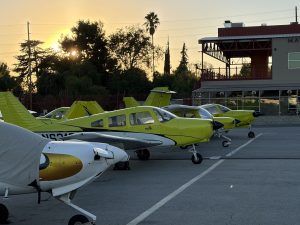
With six aircraft types on the line and online scheduling for aircraft and instructors, a full-time student can fill a week without gaps. Our private pilot course at Van Nuys offers an accelerated private pilot option alongside the standard course, starting from a fixed $10,400 for the standard 40-hour package.
Accelerated Sport Pilot Training
The sport pilot certificate has the lowest hour minimum of any airplane certificate, which makes it the most natural fit for an accelerated schedule.
The FAA minimum for a sport pilot certificate is 20 hours, including 15 hours of instruction, 5 hours solo, 2 hours of cross-country training, 10 full-stop takeoffs and landings, one solo cross-country of at least 75 nautical miles and 2 hours of checkride preparation (14 CFR 61.313). Our course plans for 25 hours of flight time in the Cessna 162 Skycatcher plus 3 hours in the full-motion simulator, at a fixed $8,400.
At two to four lessons a week, most students earn the sport pilot license in about two months. Our accelerated sport pilot training option can be completed in as little as 14 days of full-time flying, with the same caveats as any fast schedule: weather, progress and checkride timing.
No FAA medical exam is required for daytime sport flying if you hold a valid U.S. driver’s license and have never been denied an FAA medical (or had one suspended or revoked), which removes a scheduling step.

If you plan to continue to a private pilot certificate, sport flight time counts toward the 40-hour total; credit for sport instructor training follows 14 CFR 61.109(l), and night and instrument training still have to be completed.

Accelerated Training For Working Professionals
Many students train around a job. Accelerated flight training programs for working professionals are built from concentrated blocks rather than months off work.
Because we are open 9 AM to 9 PM seven days a week, working students can combine evening lessons, weekend days and short vacation blocks. What works best for most professionals:
- Do The Ground Work First. Study for and pass the FAA knowledge test on your own schedule before the flying starts in earnest. Our guide to taking the FAA knowledge test explains the process.
- Book Standing Slots. A fixed weekday evening and a fixed weekend morning each week beats booking lesson by lesson.
- Use Vacation As A Sprint. A week or two of full-time flying in the middle of training, often around first solo or the cross-country phase, moves you further than a month of weekends.
- Use The Simulator On Busy Days. Our two FAA-approved flight simulators are a productive use of an evening when weather or time rule out a flight.
Some ratings suit a week off particularly well. Our accelerated multi-engine course runs as a 7-day format that starts every Monday, with the checkride scheduled in advance for that weekend, at a fixed $5,100.
What Can Slow You Down
A fast schedule is only as fast as its slowest step. These are the items that most often stretch an accelerated timeline, and how to get ahead of them.
- The FAA Medical. Private pilot students need an FAA medical certificate before flying solo. Book the exam early, and allow extra time if you have a condition that needs review. See how to get your FAA medical certificate at Van Nuys.
- The Knowledge Test. An unfinished written exam is the most common reason a student is ready for the checkride but cannot take it.
- Weather. The spring and early-summer marine layer, winter storms and strong winds cancel some flights. Keep a few buffer days in the plan.
- Fatigue. Two or three lessons a day with study in between usually beats four in a row.
- Plateaus. Most students hit a stretch, often around landings, where progress stalls for a few lessons.
- Checkride Scheduling. Examiner availability can add weeks at some airports. We plan the checkride date as part of your schedule.
- Paperwork And Payment. Apply for your student pilot certificate early, and settle financing before your block starts. Our flight school cost guide lists every course price and payment plan.

Accelerated Training FAQs
How Fast Can I Get A Private Pilot License?
The FAA minimum for a private pilot certificate is 40 hours of flight time under 14 CFR 61.109. At Essence Flight School the typical pace is two to four months, and a student who trains full time on our accelerated private pilot schedule can finish in as little as about 30 days. It is a target, not a guarantee: your progress, weather and checkride scheduling decide the final date. Read more on our private pilot course at Van Nuys.
Is Accelerated Flight Training Worth It?
For many students, yes. Flying most days means skills build faster than they fade, so less time goes to reviewing the last lesson and the total hours often stay closer to the course plan. It suits people who can clear several weeks, handle long study days and stay rested. If you cannot take the time off, two or three lessons a week still works; it just takes longer.
Can I Train On Weekends Only?
Yes. We are open seven days a week, 9 AM to 9 PM, and many working students fly Saturday and Sunday. Weekend-only training takes longer on the calendar than a full-time schedule, so book standing weekend slots in advance and study during the week. Our guide to how long it takes to become a pilot compares full-time and part-time timelines.
How Many Hours A Day Can I Fly?
Under 14 CFR 61.195(a), a flight instructor may not conduct more than 8 hours of flight training in any 24 consecutive hours, so that is the outer limit for dual instruction with one instructor. In practice, most students learn best with two or three lessons a day, with briefings, debriefs and study in between. Beyond that, fatigue slows learning.
Does Accelerated Training Cost More?
Not by itself. Our course prices are fixed packages built on hours, and the hourly rates are the same whether you fly twice a week or twice a day. The real extra costs of full-time training are indirect: time away from work and, if you travel to Los Angeles, living costs while you train.
How Fast Can I Get A Sport Pilot License?
The FAA minimum is 20 hours of flight time under 14 CFR 61.313. Our sport pilot course is planned around 25 hours in the Cessna 162 Skycatcher, and at two to four lessons a week most students finish in about two months. Our accelerated sport pilot training option can be completed in as little as 14 days of full-time training, depending on weather, your progress and checkride scheduling. See the sport pilot license course for details.
What Should I Do Before Starting Accelerated Training?
Book your FAA medical exam early if you are working toward a private pilot certificate, start the ground school material, and aim to pass the FAA knowledge test before or early in your flight block. Sort out financing and your schedule in advance, and take a discovery flight so your first full-time day is not your first time in the airplane.
Start With One Flight This Week
A discovery flight is the best way to test whether an accelerated schedule suits you. You fly the airplane with an instructor beside you, and booking is fully online. If you enroll within 24 hours, the full cost of the discovery flight is credited toward your training.
Sources: 14 CFR 61.87, 61.109, 61.195, 61.303 and 61.313 via eCFR (checked September 25, 2026); Essence Flight School 2026 brochure and course pages. Timelines are typical or best-case figures, not guarantees. Prices are the published course prices at the time of writing; confirm current pricing at your consultation.

“Your Controls.”
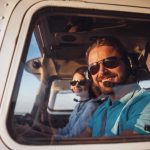
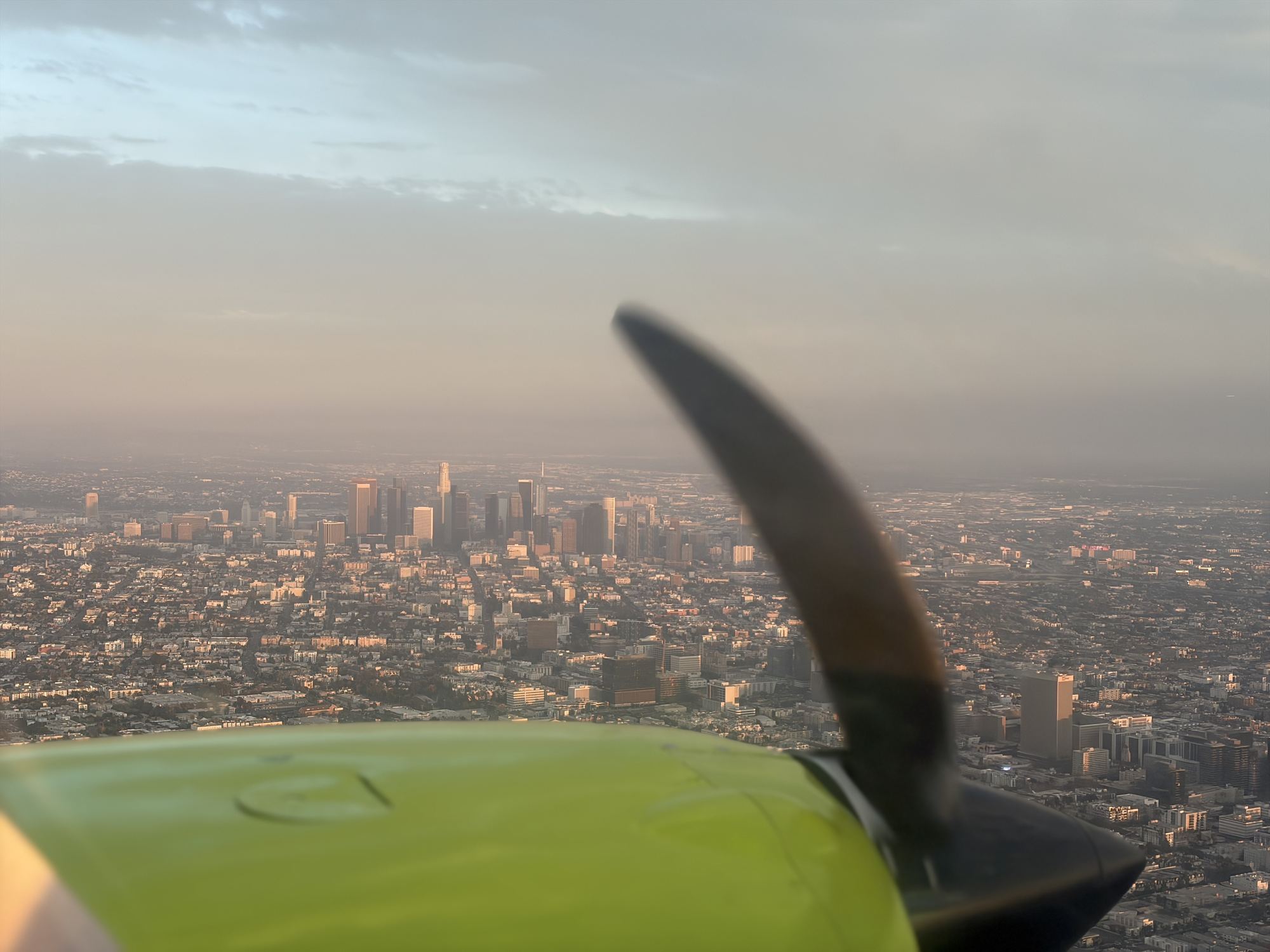
The moment every Discovery Flight is built around — you fly the airplane, with an FAA-certified instructor beside you and Los Angeles below.
Keep Exploring
Where To Next?